Global sourcing is no longer about finding the lowest pipe price. It is about choosing dependable performance across different climates, handling systems, and installation practices. Flexible Pvc Pipe can be coiled, transported efficiently, and adapted to curved routes. These features may reduce fittings, labor, and storage pressure. Sometimes, that matters more than the first quotation.
Dr. Patrick H. DeArmitt, a plastics materials specialist, offers a useful principle: “Material selection must begin with the real service conditions, not the catalogue label.” This idea fits Flexible Pvc Pipe sourcing well. Buyers should examine temperature changes, fluid compatibility, pressure demands, UV exposure, and bending frequency. A pipe that performs beside a warehouse may fail under direct sunlight or repeated movement. Small details matter.
Ask practical questions. Is the inner diameter consistent? Can the supplier provide traceable test data? Are wall thickness and reinforcement clearly documented? Does the factory inspect every production batch? These checks create confidence, although they do not eliminate every risk. Some sourcing plans still rely too heavily on attractive photographs and short samples. That is a weakness worth admitting.
Flexible Pvc Pipe also needs careful packaging. Coils should remain supported, clean, and protected from sharp edges during international transport. Certification requirements may differ between markets, so buyers must verify them before ordering. A reliable supplier should explain limitations, not only benefits. That honesty is valuable.
The strongest global sourcing decision combines material knowledge, factory evidence, and field experience. Cost remains important. It should not stand alone.
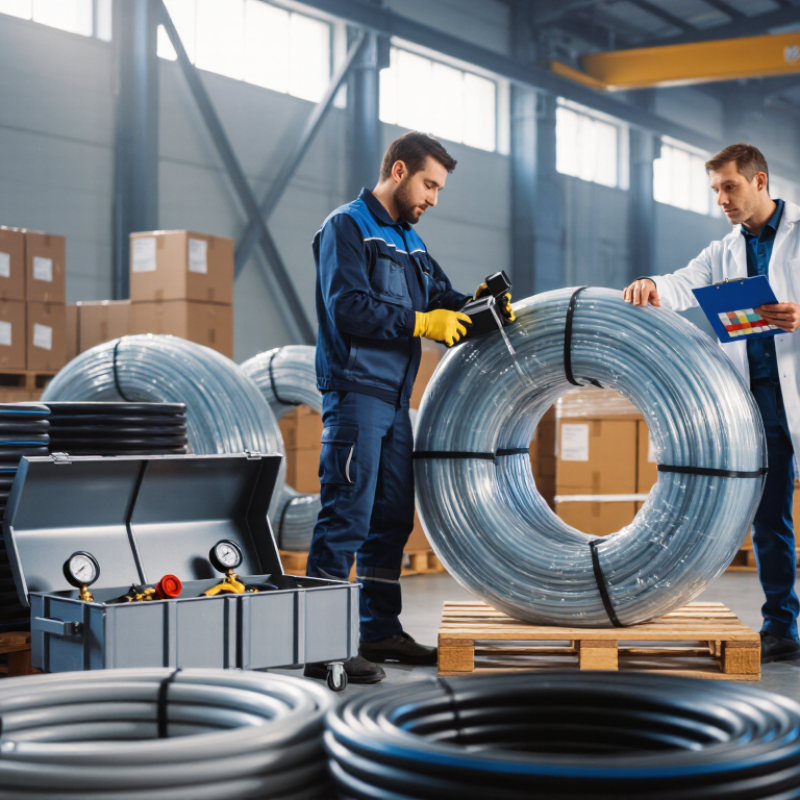
Flexible PVC pipe is a soft, thermoplastic tube designed to bend around equipment and confined spaces. It usually combines PVC resin, plasticizers, and stabilizers. Some versions include spiral reinforcement for better pressure resistance. That structure matters.
During operation, fluid moves through the pipe’s smooth inner bore. The flexible wall follows gentle bends without needing many rigid fittings. This can simplify routing and reduce connection points. Yet every bend creates some flow resistance. A sharp kink may restrict flow, damage the wall, or shorten service life. Small details matter.
For global sourcing, buyers should match the pipe with the working pressure, temperature, fluid, and installation method. They should request technical data, dimensional tolerances, and relevant test reports. Clear documentation supports reliable purchasing across different suppliers. In practice, installers often find that flexibility improves handling, but it does not guarantee durability. A pipe may look robust while failing under heat, sunlight, or repeated movement. That is where assumptions fail. Flexibility is not strength. I may be oversimplifying the material’s behavior, because performance depends heavily on formulation and construction. Careful sampling and application testing remain important before large-volume orders.
| Data Dimension | Typical Technical Information | Global Sourcing Relevance |
|---|---|---|
| Product Definition | Flexible PVC pipe is a thermoplastic pipe made primarily from polyvinyl chloride resin and formulated with plasticizers and other additives to improve flexibility and performance. | Its material formulation can be adapted for different applications, allowing buyers to select a suitable balance of flexibility, strength, chemical resistance, and cost. |
| How It Works | The pipe carries liquid, air, or selected materials through a continuous hollow wall. Its flexible wall allows bending and helps accommodate minor movement, vibration, and routing changes. | Flexible routing can reduce the number of elbows, connectors, and installation steps, but the bend radius and support requirements should be specified before purchase. |
| Common Construction | Available as smooth-wall, corrugated, reinforced, braided, or spiral-supported designs. Reinforcement may include textile, wire, or polymer layers, depending on the intended service. | Construction should be matched to pressure, vacuum, abrasion, and installation conditions rather than selected by appearance alone. |
| Typical Size Range | Commercially available sizes commonly range from small tubing of a few millimeters in inside diameter to large hose or pipe sizes exceeding 100 mm. Actual availability varies by construction and market. | Specify inside diameter, outside diameter, wall thickness, length tolerance, and connection type to avoid dimensional incompatibility between regions. |
| Flexibility | Flexibility depends on plasticizer level, wall thickness, temperature, reinforcement, and pipe diameter. A smaller bend radius generally increases installation flexibility but may reduce service life if exceeded repeatedly. | Request a minimum bend radius for both installation and operation. Do not compare flexibility using hardness alone. |
| Pressure Capability | Pressure ratings vary widely by diameter, wall structure, reinforcement, temperature, and safety factor. Unreinforced flexible tubing is generally intended for lower-pressure service than reinforced hose. | Compare working pressure, burst pressure, vacuum rating, test method, and temperature derating. Never use burst pressure as the operating limit. |
| Temperature Range | Many general-purpose PVC flexible products are designed for approximately 0°C to 60°C service, while specialized formulations may cover different ranges. Ratings must be confirmed for the specific product. | Temperature affects flexibility, pressure capacity, plasticizer migration, and long-term durability. Ask for a temperature-pressure rating chart. |
| Chemical Resistance | PVC generally offers good resistance to many dilute acids, alkalis, salts, and water-based solutions, but performance varies with concentration, temperature, exposure time, and additives. | Obtain a chemical compatibility assessment for the exact fluid. Do not assume compatibility with aromatic solvents, ketones, some hydrocarbons, or highly concentrated chemicals. |
| Typical Applications | Common uses include water transfer, irrigation, drainage, ventilation, air movement, light-duty material handling, agricultural equipment, and selected industrial fluid-transfer systems. | Application classification helps determine whether the product requires food-contact compliance, potable-water approval, electrical properties, antistatic performance, or oil resistance. |
| Connection Methods | Common connection methods include clamps, barbed fittings, threaded adapters, compression fittings, solvent-cement joints for compatible rigid PVC components, and purpose-designed couplings. | Confirm fitting standards, thread form, nominal size, hose-tail dimensions, clamp compatibility, and local installation practices before ordering. |
| Weather and UV Exposure | Outdoor durability depends on stabilizers, pigment, formulation, wall thickness, and exposure conditions. Prolonged ultraviolet exposure can cause discoloration, embrittlement, or loss of mechanical performance. | For outdoor sourcing, request documented UV-resistance data or specify protective covering and an expected service environment. |
| Installation Benefits | Low weight, coilability, and flexibility can simplify handling and allow installation around obstacles or through confined spaces. | Coiled packaging may reduce handling and storage volume, but buyers should verify coil diameter, compression limits, and potential deformation during transport. |
| Quality-Control Checks | Important checks include dimensional inspection, visual defects, hardness, tensile properties, elongation, pressure testing, leakage testing, odor, color consistency, and batch traceability. | A written inspection plan reduces variation between production batches and supports consistent approval across international destinations. |
| Standards and Compliance | Applicable requirements may cover pressure performance, drinking-water contact, food contact, chemical transfer, fire behavior, electrical conductivity, or environmental restrictions. | Compliance is market- and application-specific. Define the destination market, intended fluid, and required documentation before production. |
| Sustainability Considerations | PVC products can have long service lives and may be recyclable in suitable collection systems. Recycling feasibility depends on formulation, contamination, additives, and local infrastructure. | Request material declarations, recycled-content information where relevant, packaging details, and end-of-life guidance for the target market. |
| Best-Fit Sourcing Profile | Flexible PVC pipe is often suitable when buyers need economical fluid routing, moderate flexibility, low weight, and a broad range of sizes and constructions. | It may be less suitable for high-temperature service, severe solvent exposure, very high pressure, or applications requiring continuous high-vacuum performance unless specifically engineered and certified. |
It is a soft thermoplastic tube made from PVC resin, plasticizers, and stabilizers. Some versions include spiral reinforcement. It bends around equipment and tight spaces.
Fluid travels through its smooth inner bore. The wall follows gentle bends without requiring many rigid fittings. Sharp kinks can restrict flow.
Coiled pipe is easier to handle and route. It may reduce fittings, connection points, and installation time. Fewer connections can mean fewer leak risks.
No. Flexibility is not strength. Heat, sunlight, pressure, chemicals, and repeated movement can reduce durability. A strong-looking pipe may still fail.
Check working pressure, temperature range, fluid compatibility, wall thickness, and dimensional tolerances. Also review low-temperature flexibility and pressure-test results.
Coils usually occupy less container space than rigid lengths. They also reduce empty gaps during loading. Compare cost per usable meter, not only weight.
Excessive compression, heat, and poor stacking may deform a coil. Ask for loading photos, coil dimensions, pallet details, and temperature guidance.
Request technical documents and relevant test reports. Use independent inspections when practical. Include fittings, inland transport, insurance, storage, and possible delays in calculations. The cheapest quotation may not be cheapest overall.
Flexible Pvc Pipe is a versatile piping solution made from polyvinyl chloride with added flexibility, allowing it to bend, coil, and adapt to different installation conditions without sacrificing basic strength. Its lightweight structure, corrosion resistance, smooth inner surface, and easy handling make it suitable for water transfer, irrigation, drainage, air, and other general industrial applications. These properties support global sourcing by reducing installation labor, storage requirements, and transportation weight.
For international buyers, evaluating suppliers should include material consistency, dimensional accuracy, pressure performance, production capacity, inspection procedures, and compliance with relevant destination-market standards. Buyers should also review packaging, documentation, lead times, shipping methods, duties, currency changes, and total landed cost rather than focusing only on unit price. A reliable sourcing strategy includes sample testing, clear technical specifications, quality agreements, and contingency planning to reduce risks such as delays, product variation, or supply interruptions.

 Orient Flex