China Top Rubber Hose Manufacturers and Suppliers

Time:2026-09-07 Author:Mason
0%

China’s rubber hose sector combines large-scale production with increasingly specialized engineering. Reliable suppliers serve agriculture, construction, mining, food processing, automotive, and hydraulic equipment markets. Yet factory size alone proves little. Product selection should begin with pressure, temperature, media, flexibility, and service-life requirements.

Dr. James E. Mark, a respected polymer scientist and editor of The Science and Technology of Rubber, stated, “The properties of rubber depend strongly on its molecular structure and processing history.” That principle remains practical on the factory floor. A hose may look smooth outside, while its inner tube fails under oil, steam, or abrasive slurry. Strong manufacturers therefore control compound formulation, reinforcement winding, curing time, and dimensional tolerances. They also perform pressure, impulse, leakage, and adhesion tests. Some suppliers follow ISO, SAE, EN, or customer-specific specifications. Verification still matters.

Details reveal capability. Ask for batch records, material certificates, test reports, and traceable production dates. Inspect the cover for cracks, uneven texture, exposed reinforcement, or poor markings. Check fittings and crimp dimensions carefully. Small defects can become expensive downtime.

Not every attractive catalog reflects consistent quality. This is where sourcing becomes less comfortable. Price comparisons can hide different rubber compounds, testing depth, and warranty limits. A capable China Rubber Hose manufacturer should explain these differences clearly, not simply promise the lowest price. Buyers should compare samples, technical documents, communication speed, and after-sales support. The best supplier is not always the largest. It is the one that understands the application and can repeatedly deliver a hose that performs under real working conditions.
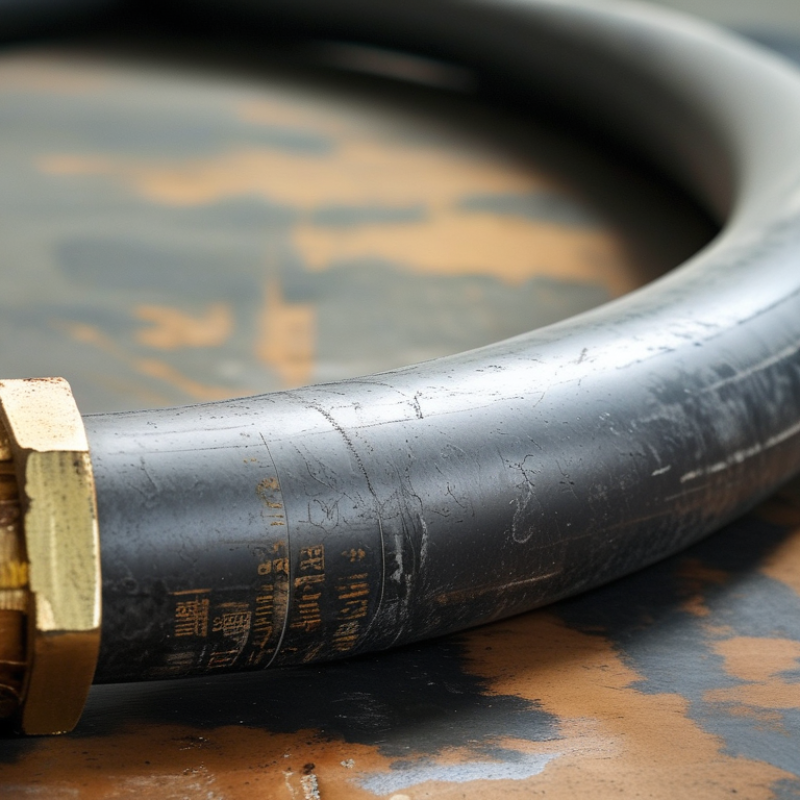
China Top Rubber Hose Manufacturers and Suppliers

Types of Rubber Hoses Manufactured in China

China Top Rubber Hose Manufacturers and Suppliers

China produces many rubber hose types for industrial, agricultural, automotive, and construction applications. Hydraulic hoses use reinforced layers to handle high pressure and repeated bending. Air hoses support pneumatic tools, compressors, and factory lines. Water suction and discharge hoses move liquids through pumps, tanks, and irrigation systems.

Material choice depends on the working medium and temperature. NBR hoses often suit oils and fuels, while EPDM performs well with water, steam, and outdoor weather. Silicone hoses tolerate wide temperature changes but may need extra protection against abrasion. Chemical hoses require carefully selected inner tubes, reinforcement, and cover materials. Food-transfer hoses also need clean surfaces and documented material compliance.

Good Chinese manufacturers normally control rubber mixing, extrusion, reinforcement, curing, and final inspection in separate stages. Pressure tests, dimensional checks, adhesion tests, and visual inspections can reveal weak points before shipment. Ask for test records, working pressure data, temperature limits, and batch traceability. A sample should be tested in real conditions when possible. It sounds obvious, but it is often skipped.

No hose fits every application. A hose may pass a factory test yet fail after sharp bending, poor storage, or an incorrect fitting. Reliable suppliers explain these limits instead of promising universal performance. Specification sheets help, but practical installation experience still matters.

Key Applications Across Industrial and Commercial Sectors

China Top Rubber Hose Manufacturers and Suppliers

Rubber hoses support demanding industrial and commercial work. They carry water, air, oil, chemicals, slurry, and hydraulic fluids. In factories, hoses connect pumps, compressors, molding machines, and cooling systems. Construction sites use them for concrete placement, dewatering, and pneumatic tools. Commercial buildings also depend on flexible hoses in fire protection, HVAC, sanitation, and food-service systems.

Grand View Research’s 2024 industrial hose market analysis projects steady growth through 2030, with a compound annual growth rate of about 4.9%. This expansion reflects infrastructure investment, manufacturing automation, and energy development. However, growth does not remove selection risks. A hose may look sound and still fail under heat, abrasion, pressure, or chemical exposure. Buyers should check working pressure, temperature range, bend radius, reinforcement, and fluid compatibility. ISO 18752 and SAE J517 provide useful benchmarks for industrial and hydraulic hose performance. Still, standards cannot replace field testing. That part is often underestimated.

Tips: Match the hose to the actual medium, not its appearance. Record pressure surges, cleaning chemicals, and installation length. Ask suppliers for test reports, traceability, and sample verification. A small mistake here can become costly downtime. Manufacturers and suppliers should also explain storage limits and replacement intervals clearly. That information is practical, but not always provided.

China Top Rubber Hose Manufacturers and Suppliers - Key Applications Across Industrial and Commercial Sectors

Common product categories, technical characteristics, applicable standards, and major end-use sectors

Rubber Hose Category Typical Construction Common Size Range Typical Service Conditions Key Applications Relevant International Standards Important Selection Factors
Hydraulic Hose Oil-resistant synthetic rubber tube, one or more layers of braided or spiral steel-wire reinforcement, and an abrasion-resistant cover. Approximately 6–51 mm internal diameter for many industrial systems. High-pressure hydraulic oil, water-glycol fluids, and selected biodegradable hydraulic fluids; operating pressure depends on construction and size. Construction machinery, agricultural equipment, material handling systems, mining equipment, industrial power units, and mobile hydraulics. SAE J517; ISO 18752; EN 853; EN 856 Working pressure, impulse performance, minimum bend radius, fluid compatibility, temperature, abrasion resistance, and fitting crimp specifications.
Oil and Fuel Hose Fuel- or oil-resistant elastomer tube with textile, wire, or braided reinforcement and a weather-resistant outer cover. Commonly 5–100 mm internal diameter, depending on transfer volume and equipment design. Petroleum-based fuels, lubricating oils, diesel, and selected biofuel blends within the hose manufacturer's compatibility limits. Fuel dispensing, vehicle systems, generators, marine equipment, oil transfer, workshops, and industrial fluid handling. SAE J30; EN 1360; EN 12115; ISO 1823 Fuel formulation, permeation resistance, electrical continuity, temperature, pressure, static-control requirements, and resistance to ozone and weathering.
Air and Water Hose General-purpose EPDM or synthetic rubber tube with textile reinforcement and an abrasion-resistant cover. Approximately 6–100 mm internal diameter for pneumatic tools, utility water, and general service lines. Compressed air, water, and non-aggressive aqueous fluids; temperature and pressure vary by hose grade. Factories, workshops, shipyards, construction sites, compressors, maintenance systems, and equipment wash-down operations. ISO 2398; EN ISO 1403; ISO 4641 for selected water-service hoses Maximum working pressure, kink resistance, cold flexibility, cover abrasion, oil resistance, and suitability for potable or non-potable water.
Steam Hose Heat-resistant rubber tube with textile or wire reinforcement and a heat-resistant outer cover. Often 13–51 mm internal diameter in industrial steam-service installations. Saturated steam service; many industrial grades are designed for temperatures up to about 210°C, subject to pressure and service limitations. Food processing, chemical plants, refineries, laundries, sterilization systems, and industrial cleaning operations. EN ISO 6134; SAE J429 for applicable industrial classifications Steam temperature and pressure, exposure duration, condensate drainage, safety factor, cover heat resistance, and installation routing.
Chemical Hose Chemically resistant rubber tube, often reinforced with textile layers, with a smooth or specially formulated inner surface. Approximately 19–100 mm internal diameter for transfer and loading applications. Acids, alkalis, solvents, alcohols, and other chemicals only when the compound is confirmed compatible with the specific medium. Chemical processing, pharmaceutical production, bulk transfer, tank loading, wastewater treatment, and industrial laboratories. EN 12115; EN 13765 for thermoplastic composite hose applications Chemical concentration, temperature, permeation, electrical continuity, pressure, vacuum resistance, cleaning method, and regulatory requirements.
Food and Beverage Hose Non-toxic, odor-resistant rubber tube with a smooth hygienic bore and food-contact-compatible reinforcement and cover. Approximately 19–102 mm internal diameter for liquid transfer and process connections. Water, milk, beverages, edible oils, alcohol-containing products, and cleaning solutions within the approved service range. Dairy plants, breweries, wineries, beverage filling, food processing, edible-oil handling, and hygienic production lines. FDA 21 CFR 177.2600; EU Regulation (EC) No 1935/2004; EU Regulation (EU) No 10/2011 where applicable Food-contact status, sanitary design, clean-in-place requirements, temperature, product compatibility, odor transfer, and cleaning-agent resistance.
Material Handling Hose Heavy-duty rubber tube with thick wear-resistant lining and textile or steel reinforcement. Approximately 25–300 mm internal diameter for abrasive solids and slurry transfer. Dry or wet abrasive materials such as sand, gravel, cement, minerals, slurry, and shot-blasting media. Mining, quarrying, cement production, dredging, foundries, concrete plants, and bulk-material processing. ISO 4649 for abrasion testing; ISO 1307 for hose dimensions Lining abrasion index, conveyed-material particle size, flow velocity, bend radius, vacuum capability, static dissipation, and coupling method.
Concrete Pumping Hose Thick abrasion-resistant rubber tube reinforced with multiple high-tensile steel-wire layers. Commonly 50–125 mm internal diameter for concrete placement equipment. High-pressure conveyance of wet concrete, mortar, grout, and similar cementitious materials. Building construction, bridges, tunnels, precast production, foundations, and high-rise concrete placement. EN 12001; ISO 1307 for dimensional reference Rated pressure, end-fitting retention, abrasion resistance, bend radius, wall thickness, coupling security, and inspection frequency.
Welding and Gas Hose Flexible rubber tube, often supplied as twin-line hose, with gas-specific inner compounds and flame-resistant covers. Typically 5–13 mm internal diameter for portable welding and cutting equipment. Oxygen, acetylene, fuel gases, inert shielding gases, and compressed air according to the hose designation. Metal fabrication, shipbuilding, repair workshops, construction, maintenance, and gas cutting operations. ISO 3821; EN 559; ISO 14113 for selected gas-service assemblies Gas identification, resistance to gas permeation, flame behavior, working pressure, color coding, bend flexibility, and connection integrity.
Radiator and Cooling Hose Heat-resistant EPDM or equivalent elastomer, with textile reinforcement where required for pressure and dimensional stability. Approximately 16–76 mm internal diameter for vehicle and industrial cooling circuits. Engine coolant, water, and approved antifreeze mixtures; service temperature is commonly around −40°C to 125°C, depending on grade. Passenger vehicles, commercial trucks, buses, agricultural machinery, generators, compressors, and industrial engines. SAE J20; ISO 4081 Coolant formulation, temperature cycling, pressure pulsation, ozone resistance, dimensional stability, bend geometry, and clamp compatibility.
Marine and Offshore Hose Weather-resistant rubber construction with textile or wire reinforcement and optional fire-resistant or buoyant design. Approximately 25–300 mm internal diameter for marine transfer and onboard service systems. Seawater, fuel, lubricating oil, ballast water, cargo fluids, and deck-service media, depending on the hose type. Commercial vessels, shipyards, ports, offshore platforms, dredging equipment, aquaculture, and marine engine rooms. ISO 15540; ISO 15541; EN 1765 for oil-suction and discharge hose applications Marine approval requirements, saltwater resistance, oil compatibility, flame resistance, buoyancy, vacuum capability, and coupling security.
HVAC and Refrigerant Hose Refrigerant-resistant rubber or thermoplastic construction with low-permeation inner layers and reinforced pressure carcass. Commonly 5–19 mm internal diameter for service, charging, and connection assemblies. Refrigerants and refrigeration oils compatible with the hose construction; operating temperature and pressure depend on the refrigerant and system. Air-conditioning maintenance, refrigeration service, heat pumps, cold storage, and automotive climate-control systems. SAE J2064; EN 1736 Refrigerant type, permeation rate, burst pressure, temperature range, oil compatibility, bend radius, and fitting leak tightness.
Fire-Fighting Hose Textile-reinforced rubber-lined hose with a durable outer jacket designed for rapid deployment and repeated handling. Common nominal sizes include 25, 38, 45, 52, 65, 70, and 75 mm. Pressurized water and selected fire-suppression media; service performance depends on the hose class and certification. Municipal fire services, industrial fire brigades, commercial buildings, marine facilities, and emergency response systems. EN 14540; NFPA 1961; ISO 14557 for selected fire-hose types Working and burst pressure, abrasion, heat and flame exposure, coupling compatibility, kink resistance, storage life, and certification.
General-Purpose Industrial Hose Multi-purpose synthetic rubber tube with textile reinforcement and a weather- and abrasion-resistant cover. Approximately 6–100 mm internal diameter. Air, water, mild chemicals, light oils, and utility fluids according to the selected compound and hose specification. Manufacturing plants, utilities, maintenance departments, workshops, agricultural facilities, and equipment assembly. ISO 1307; EN ISO 1403; SAE J20 for applicable coolant-related designs Application media, pressure, temperature, flexibility, cover durability, cleaning requirements, color coding, and connection type.

Technical ranges are typical industry reference values rather than guarantees for every product. Final selection should be based on the manufacturer's datasheet, applicable certification, fluid-compatibility chart, operating pressure, temperature, bend radius, and installation requirements.

Manufacturing Standards and Quality Control Practices

China Top Rubber Hose Manufacturers and Suppliers

Manufacturing Standards and Quality Control Practices

Reliable rubber hose production begins with controlled materials, not attractive packaging. The International Rubber Study Group reported nearly 15 million tonnes of global natural rubber consumption in 2023. That scale makes batch consistency essential. Suppliers should verify polymer grade, carbon black content, plasticizer levels, and moisture before mixing. Test records must identify each compound by lot number.

Standards create measurable checkpoints. ISO 1307 defines hose dimensions and tolerances, while ISO 1402 covers hydrostatic pressure testing. For hydraulic applications, ISO 1436 and SAE J517 guide construction and performance requirements. ASTM D380 also provides recognized hose testing methods. Quality teams should inspect inner diameter, wall thickness, reinforcement alignment, adhesion, and minimum bend radius.

A hose may look perfect. It can still fail.

Tips: Request third-party test reports, production samples, and traceable batch records. Confirm pressure ratings under real temperature conditions. Inspect cut sections for uneven wire spacing or trapped air. A 2024 industry outlook from the International Rubber Study Group emphasized continuing pressure on raw-material supply and pricing. This makes incoming-material testing more important, yet some factories still rely too heavily on visual checks. That weakness deserves review. Proof should come from repeatable data, not confident claims.

How to Evaluate Chinese Hose Manufacturers and Suppliers

Evaluating Chinese rubber hose manufacturers requires more than comparing catalog prices. In factory sourcing work, I examine production records, compound control, and testing routines before discussing volume. A reliable supplier should explain working pressure, temperature range, reinforcement layers, and medium compatibility. Ask for current technical data, not copied tables. Small details matter. Can the team identify batch numbers on a finished coil? Are storage racks dry, shaded, and clean? These observations often reveal more than polished sales photographs.

Request samples made from the same materials and process planned for mass production. Check inner diameter, wall thickness, flexibility, cover adhesion, and fitting dimensions with calibrated tools. Ask for test results covering pressure, leakage, impulse resistance, and aging when relevant. An experienced manufacturer will describe test conditions and failure limits clearly. I also compare sample results with an independent laboratory when the application is critical. This costs time, but one unverified report can create expensive delays. Do not accept vague claims such as “premium quality.” Evidence should be traceable.

Supplier reliability also depends on communication and corrective action. Review response times, change-control procedures, inspection records, and replacement policies. A factory that admits a previous defect may be more trustworthy than one promising perfection. That point deserves reflection. Visit the facility if possible, and observe how workers handle uncured rubber, reinforcement fabric, and finished hoses. Confirm export documents, packaging protection, and production capacity during peak seasons. Price still matters, but unstable quality can erase every apparent saving.

Export Services, Customization, and Product Support

Export capability now means more than placing rubber hoses in a container. Grand View Research estimates the global industrial hose market will expand at about 5.8% annually through 2030. This growth increases pressure on suppliers to manage documentation, packaging, and delivery accuracy. Experienced manufacturers should provide commercial invoices, packing lists, certificates of origin, and material traceability records. They should also confirm pressure ratings before shipment.

Customization begins with the working environment. A hose carrying abrasive slurry needs different reinforcement from one handling hydraulic oil. Suppliers can adjust bore size, cover compounds, reinforcement layers, flange dimensions, and temperature resistance. ISO 18752, EN 853, and SAE specifications offer practical reference points. Samples should undergo pressure, impulse, leakage, and visual inspections. Small details matter.

Export support should continue after delivery. Technical teams can explain bend radius, coupling installation, storage limits, and replacement intervals. A clear product label helps warehouse staff identify pressure class and production batch quickly. Not every supplier forecasts demand correctly. That is worth admitting. Buyers should request test reports, inspection photos, and realistic lead times instead of accepting vague promises. The UN Comtrade database also shows substantial international trade under HS 4009, reflecting strong cross-border demand for vulcanized rubber tubes and hoses. Reliable support reduces costly downtime, although no checklist replaces field experience.

FAQS

: What types of rubber hoses are commonly manufactured in China?

: Common types include hydraulic, air, water suction, water discharge, chemical, food-transfer, and automotive hoses. They serve different working conditions.

How should buyers choose the correct hose material?

Choose materials according to the medium, temperature, and outdoor exposure. NBR often suits oils and fuels. EPDM performs well with water, steam, and weather. Silicone handles broad temperature changes but may need abrasion protection.

What information should buyers request from a hose supplier?

Request working pressure, temperature limits, test reports, dimensions, and batch traceability records. Inspection photos can also help. Vague answers deserve caution.

Can one rubber hose handle every application?

No hose fits every application. A hose may pass factory testing but fail after sharp bending or incorrect fitting. That possibility is easy to underestimate.

What testing is important before shipment?

Important checks include pressure, impulse, leakage, adhesion, dimensions, and visual inspections. A sample should be tested under real working conditions when possible. Factory data is useful, but not perfect.

Can rubber hoses be customized for special applications?

Suppliers can adjust bore size, cover compounds, reinforcement layers, flange dimensions, and temperature resistance. Abrasive slurry needs different reinforcement from hydraulic oil. The working environment controls the design.

What export documents should a reliable supplier provide?

Typical documents include commercial invoices, packing lists, certificates of origin, and material traceability records. Suppliers should confirm pressure ratings before shipment. Documentation errors can delay delivery.

What support is useful after hose delivery?

Technical support should explain bend radius, coupling installation, storage limits, and replacement intervals. Clear labels can show pressure class and production batch. Field experience still matters.

Conclusion

China is home to a wide range of Rubber Hose manufacturers and suppliers serving industrial and commercial markets. Their product lines may include hydraulic hoses, air and water hoses, oil-resistant hoses, chemical hoses, food-grade hoses, welding hoses, and high-temperature or abrasion-resistant solutions. These products support applications in construction, mining, agriculture, transportation, manufacturing, energy, and general equipment maintenance, where flexibility, pressure resistance, durability, and compatibility with different media are essential.

When evaluating Chinese suppliers, buyers should review material selection, production capabilities, testing procedures, certifications, traceability, and quality-control systems. Reliable manufacturers typically provide dimensional checks, pressure testing, performance verification, and consistent batch management. Export services may include customized sizes, reinforced structures, fittings, packaging, labeling, documentation, and technical support. Clear communication about operating conditions, delivery requirements, inspection standards, and after-sales service helps buyers select a dependable partner and achieve stable long-term performance.


Mason

Mason

Mason is a seasoned marketing professional with a deep expertise in the company's offerings and a passion for driving brand awareness. With a strong background in digital marketing strategies, he has an innate ability to connect with diverse audiences and effectively communicate product benefits.......