Choosing a reliable supplier requires more than comparing factory photos and attractive prices. This guide examines China’s top 10 Hose Sleeve manufacturers for global buyers seeking consistent protection, practical customization, and dependable communication. The selected companies are considered through manufacturing experience, product range, quality systems, and export capability. Their sleeves may protect hydraulic, industrial, automotive, and agricultural hoses from abrasion, heat, sunlight, or accidental impact.
Details matter here. A strong manufacturer should explain fiber composition, inner diameter, wall thickness, temperature limits, and installation methods clearly. Buyers should also review sample quality, production capacity, inspection procedures, and packaging before placing large orders. A sleeve that looks strong in a catalog may loosen, fray, or trap heat during real operation. That is why practical testing remains important.
Ask for evidence.
Useful evidence includes material specifications, test reports, factory audits, and clear responses about tolerances. Certifications can support confidence, but they should match the actual product and destination market. Some suppliers may offer excellent pricing yet provide limited technical guidance. Others may communicate well but struggle with urgent volume requirements. This article aims to present a balanced starting point, not a final purchasing decision. Product performance can vary between batches, and specifications may change without careful confirmation. Global buyers should verify current information directly with each manufacturer, assess samples under working conditions, and confirm shipping, warranty, and compliance requirements before signing a contract. With careful comparison, the right Hose Sleeve partner can reduce maintenance risks and support safer, more stable hose assemblies.
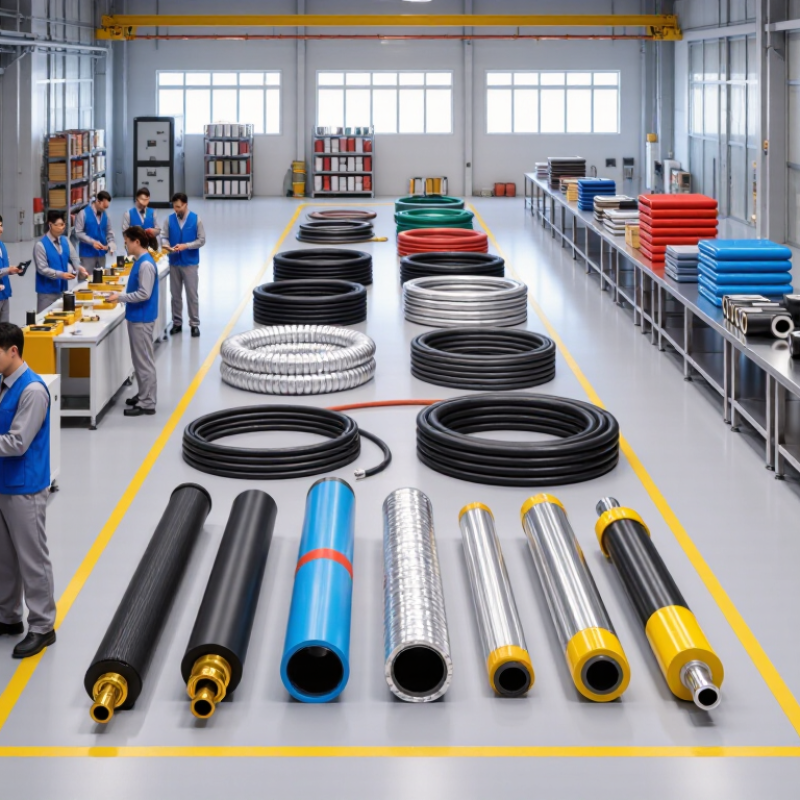
Hose sleeves are protective covers placed around hydraulic, pneumatic, and industrial hoses. They help guard against abrasion, sunlight, heat, and accidental rubbing. Common materials include textile blends, rubber, polyester, and coated fibers. Each choice behaves differently under pressure, temperature, and chemical exposure.
Global buyers use hose sleeves to improve hose organization and workplace safety. A bundled hose looks cleaner and is easier to inspect. Some sleeves also help contain fragments if a hose fails, depending on their construction and test results. They do not repair damaged hoses. A sleeve is not a cure-all. Selecting the wrong diameter can cause slipping, trapped heat, or difficult maintenance. Buyers should check inner diameter, temperature range, abrasion resistance, flexibility, and installation method. A practical sample test often reveals problems that a product sheet misses.
Tips: Measure the hose assembly after fittings are installed. Request material specifications, inspection records, and traceability details. Test the sleeve near real bends and connection points. Keep a small allowance for movement, but avoid excessive looseness. Recheck performance after exposure to heat, oil, dust, and repeated motion. The specification may still be imperfect, so feedback from technicians should shape the final purchase.
When selecting a Chinese hose sleeve manufacturer, inspect the product before trusting the sales presentation. Ask for samples made from the same yarn, coating, and production line used for bulk orders. A sleeve should fit the hose tightly without crushing it. Check abrasion resistance, temperature range, tensile strength, and resistance to oil or moisture. Request test reports with laboratory names, dates, and measured values.
Factory evidence matters. Review photographs of braiding machines, inspection stations, storage areas, and finished-goods labels. A reliable supplier should explain batch coding and material traceability clearly. Confirm whether operators measure inner diameter during production, not only before shipping. Small details reveal process discipline. Ask about minimum order quantities, lead times, packaging, and replacement procedures for rejected goods.
Communication also deserves testing. Send a technical drawing with exact dimensions and tolerances. Compare the supplier’s questions and revised sample with your requirements. I once accepted a sample after checking appearance only. The sleeve looked excellent, but its actual expansion was insufficient. That mistake showed me why fitting tests must use the buyer’s real hose. A video audit can help, though it cannot fully replace an independent factory inspection. Check export documents, quality records, and payment terms carefully. Do not rely on promises alone. Test the evidence.
China Top 10 Hose Sleeve Manufacturers for Global Buyers
China’s Top 10 Hose Sleeve Manufacturers by Product Strengths
China’s leading ten hose sleeve manufacturers should be judged by product strengths, not factory size alone. Global industrial hose demand remains substantial. Grand View Research valued the industrial hose market at about USD 14.8 billion in 2023. This growth supports stronger demand for protective sleeves in construction, agriculture, mining, and fluid-power systems.
Some manufacturers focus on hydraulic hose protection. Their products commonly use polyester, nylon, or aramid yarns for abrasion resistance and burst containment. Others specialize in textile fire sleeves, silicone-coated sleeves, or high-temperature fiberglass constructions. Several factories offer spiral guards for excavators and loaders. PTFE and braided sleeves serve chemical and thermal applications. Custom cutting, heat sealing, color coding, and small-batch development are important advantages for international buyers.
Technical proof matters more than polished catalog language. Buyers should request test results for abrasion, temperature, flame exposure, and dimensional stability. ISO 6803 provides a recognized method for hydraulic hose impulse testing, while ISO 6942 supports evaluation of heat-protective materials. MarketsandMarkets has reported continued expansion in industrial hose applications through 2028, but forecasts vary between research firms. That uncertainty deserves attention. No supplier is strongest in every category. A factory may produce excellent abrasion sleeves yet lack reliable flame testing or export documentation. Sample inspection, traceability records, and production audits remain essential before volume orders.
This chart presents the key product-strength dimensions commonly used by global buyers when evaluating Chinese hose sleeve manufacturers. The scores are normalized benchmark weights rather than company-specific rankings.
Higher scores indicate greater importance in typical industrial sourcing decisions, including thermal protection, abrasion resistance, pressure protection, chemical resistance, flame retardancy, flexibility, size coverage, customization, compliance, and export capability.
When comparing the top ten hose sleeve manufacturers, material selection should match the working environment. Polyester sleeves suit abrasion protection and moderate temperatures. Nylon offers flexibility and lower weight. Fiberglass with silicone coating handles higher heat. Aramid improves cut resistance but usually costs more. Grand View Research valued the global industrial hose market at about USD 14.6 billion in 2023, with projected growth of roughly 4.9% annually through 2030. This growth increases material choices, but also complicates purchasing decisions.
Check inner diameter, wall thickness, maximum temperature, pressure resistance, burst strength, and minimum bend radius. Ask for test reports, batch traceability, and samples from the same production line. ISO 9001 certification supports process control, but it does not prove every sleeve meets your application needs. SAE and ISO references can clarify hose compatibility. Small details matter. A sleeve that fits loosely may slide during vibration.
Price comparisons should include tooling, minimum order quantity, packaging, freight, duties, and replacement costs. MarketsandMarkets has reported continued expansion in hydraulic hose demand through 2028, driven by construction and industrial equipment. Therefore, production capacity and delivery stability deserve equal attention. In my experience, the cheapest quotation often hides inconsistent thickness or weak stitching. Yet high price alone proves little. One weakness in this comparison is relying too heavily on documents; real abrasion testing may reveal a different result. Requesting a short field trial remains the safer decision.
Selecting a top-ten supplier list requires more than online visibility. Start with sleeve material, temperature range, abrasion resistance, and application pressure. Ask for technical datasheets and recent batch records. The global industrial hose market was valued at about USD 12.4 billion in 2023, according to Grand View Research. This scale increases supplier choice, but also increases quality variation.
USD 12.4 billion
Global industrial hose market in 2023
Audit the factory before ordering. Review production flow, incoming-material checks, tensile testing, and traceability labels. ISO’s 2022 Survey recorded more than 1.2 million ISO 9001 certificates worldwide. Certification helps, but it does not prove every sleeve meets your design. Request samples from the same production line used for mass orders. Measure wall thickness at several points. Check stitching, edge finishing, and fit over your hose. I have seen attractive samples fail during repeated bending. That risk deserves attention.
1.2 million+
ISO 9001 certificates worldwide recorded in ISO’s 2022 Survey
Tips: Compare at least three quotations. Ask for tooling, minimum order quantity, lead time, packaging, and inspection terms in writing. Use a small pilot order before committing to container quantities. Confirm whether the quoted price includes testing and export packaging. For ordering, provide drawings, hose dimensions, operating temperature, color requirements, and delivery location. A pre-shipment inspection can catch incorrect sizes, but it cannot repair weak materials. That is why supplier records and direct factory communication matter.
Request samples using the same yarn, coating, and production line planned for bulk orders. Inspect the factory’s braiding machines, inspection stations, and storage areas. Do not trust promises alone.
Check abrasion resistance, temperature range, tensile strength, oil resistance, moisture resistance, and burst strength. Ask for reports showing laboratory names, dates, and measured values. Test it.
Use the buyer’s actual hose for fitting tests. The sleeve should fit tightly without crushing the hose. Measure expansion, inner diameter, wall thickness, and bend behavior.
Polyester supports abrasion protection and moderate temperatures. Nylon is lighter and more flexible. Silicone-coated fiberglass handles higher heat. Aramid improves cut resistance but often costs more.
Request batch codes, material traceability records, quality logs, and recent production data. Confirm that operators measure inner diameter during production. A final inspection alone may miss process problems.
No. Certification suggests process control, but it cannot prove every sleeve suits your application. Compare certification documents with real samples and field testing. Small details matter.
Include tooling, minimum order quantity, packaging, freight, duties, inspection, and replacement costs. The cheapest quote may hide uneven thickness or weak stitching. A high price proves little.
Compare at least three written quotations. Provide drawings, hose dimensions, tolerances, temperature, color, packaging, and delivery details. Start with a small pilot order before purchasing container quantities.
A video audit can reveal machines, storage conditions, and production flow. It cannot fully confirm hidden material or process problems. I once trusted appearance and missed poor expansion. That mistake still matters.
This guide explains what a Hose Sleeve is and why global buyers use it to protect hydraulic hoses, cables, and industrial lines from abrasion, heat, weather, and mechanical wear. It introduces practical criteria for evaluating Chinese manufacturers, including production capability, material expertise, customization options, quality-control systems, export experience, and communication efficiency. The article also presents China’s top 10 Hose Sleeve manufacturers by product strengths, without focusing solely on price or marketing claims.
Buyers will learn how to compare materials such as nylon, polyester, polypropylene, and specialized high-temperature fibers, as well as evaluate specifications, durability, certifications, packaging, lead times, and total purchasing costs. The final section provides a step-by-step process for shortlisting suppliers, requesting samples, reviewing factory and inspection records, confirming technical details, negotiating terms, and placing orders with reduced risk. This approach helps international purchasers select reliable partners and obtain Hose Sleeve products that match their operating conditions and budget.

Orient Flex