Choosing the right Duct Hose for global sourcing requires more than comparing prices. A hose may look suitable in a product photo, yet fail after repeated bending, heat exposure, or contact with abrasive dust. The correct choice starts with the working environment. Consider air temperature, pressure, airflow, chemical contact, vibration, and the minimum bend radius. These details determine whether polyurethane, PVC, silicone, rubber, or coated fabric is appropriate.
Small details matter.
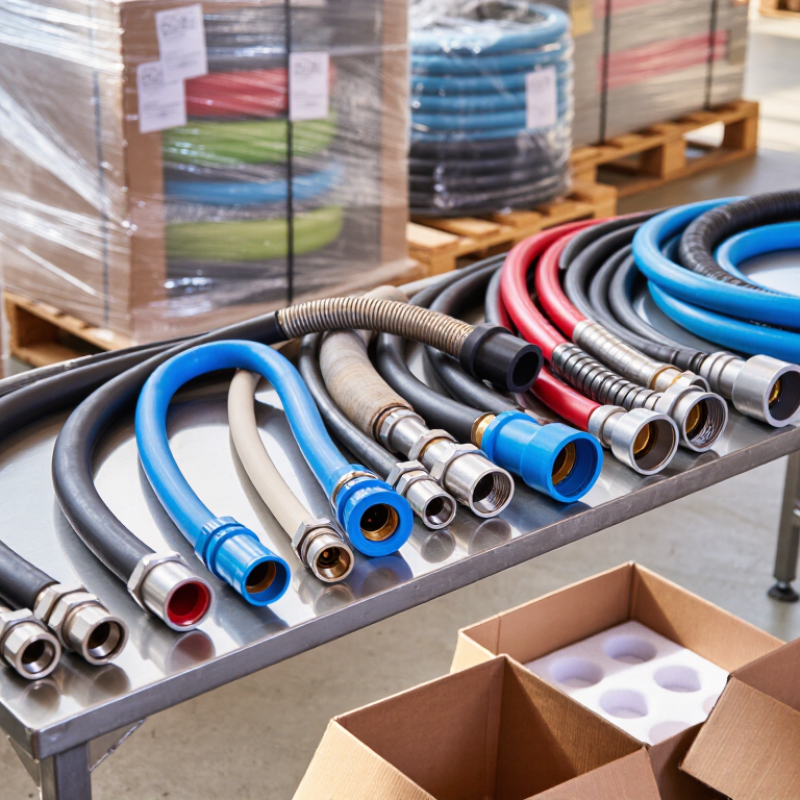
A reliable sourcing process should connect technical requirements with supplier verification. Ask for material specifications, operating limits, test reports, and sample approval before placing a large order. Check whether the supplier can maintain consistent wall thickness, reinforcement quality, and connector dimensions across production batches. Packaging also deserves attention. A crushed hose can arrive with permanent folds, even when the factory inspection was satisfactory. Clear labeling, moisture protection, and pallet stability can reduce avoidable damage during international transport.
Price is only one factor.
Global sourcing often exposes weaknesses in early assumptions. A spreadsheet may list pressure ratings but ignore installation space or seasonal temperature changes. This happens more often than expected. Practical evaluation should include a physical sample, trial installation, and feedback from the final users. Review lead times, minimum order quantities, replacement support, and communication quality before confirming the supplier. Standards and documentation should match the destination market and application requirements. When technical evidence, supplier capability, and real-world testing support the decision, buyers can select a Duct Hose that performs reliably beyond the catalogue. Even then, review the decision periodically. Conditions change. A good sourcing choice should be checked, not simply remembered.
How to Choose the Right Duct Hose for Global Sourcing
Define the Application, Airflow Needs, and Operating Conditions
Choosing a duct hose starts with the application, not the catalog photo. Identify whether it will carry hot air, dust, fumes, or lightweight particles. Each medium creates different demands. A workshop extracting wood dust needs abrasion resistance and a smooth internal surface. A ventilation system may prioritize flexibility and low pressure loss. Confirm the required inner diameter, airflow volume, and operating pressure. A hose that looks suitable can restrict air when its diameter is slightly undersized. Measure the connection points, including clamps and movement during operation.
Tips: Record temperature, pressure, airflow, bend radius, and exposure time. Check chemical compatibility with the actual gases, not general assumptions. Ask for test data, material details, and dimensional tolerances. Request samples when the installation is critical.
Operating conditions often decide the final material. Heat can harden some plastics, while cold can reduce flexibility. Continuous bending requires a tighter construction than occasional positioning. Consider abrasion from particles, outdoor moisture, static control, and cleaning methods. A longer hose may simplify installation, but it can increase resistance and sag. I have seen projects specify maximum temperature only, then overlook pressure changes during startup. That gap can cause premature failure. Recheck the hose after a trial installation. Actual routing sometimes differs from the drawing. Reliability comes from matching measured conditions with verified specifications, even when the first selection seems acceptable.
Define the application, airflow needs, and operating conditions before specifying a duct hose.
| Application | Typical Conveyed Medium | Recommended Hose Construction | Common Diameter Range | Typical Temperature Range | Airflow and Pressure Considerations | Key Selection Requirements |
|---|---|---|---|---|---|---|
| General ventilation | Ambient air, light dust, and low-moisture exhaust | Lightweight PVC-coated fabric or flexible thermoplastic hose with a helical reinforcement | 75–300 mm | Approximately −20 to 70°C | Suitable for low to moderate airflow and low static pressure. Keep bends gradual to reduce resistance. | Low weight, easy installation, compact storage, and sufficient abrasion resistance for routine ventilation work. |
| Portable fume extraction | Welding fumes, smoke, vapors, and localized process emissions | Abrasion-resistant thermoplastic or coated fabric hose with a strong spiral support | 50–250 mm | Approximately −20 to 90°C | Choose a smooth or semi-smooth inner surface where possible. The extraction fan must overcome hose friction and pressure losses. | Good flexibility, crush recovery, chemical resistance appropriate to the fumes, and secure earthing where static charge may be present. |
| Hot-air conveyance | Heated air from dryers, ovens, heaters, or engine compartments | Silicone-coated fiberglass, high-temperature fabric, or another heat-rated construction | 75–400 mm | Approximately 150–300°C | Confirm both continuous and peak temperature ratings. Higher temperatures can reduce service life if the hose is continuously flexed. | Heat resistance, insulation requirements, flame behavior, clamp compatibility, and adequate clearance from nearby materials. |
| Dust collection | Wood dust, plastic dust, paper fibers, and dry process particles | Heavy-duty polyurethane or abrasion-resistant thermoplastic hose with reinforced helix | 50–300 mm | Approximately −40 to 90°C | Particle loading increases pressure loss. Use a diameter that supports the required conveying velocity without excessive fan energy. | High abrasion resistance, smooth interior, grounding provision, strong bend radius, and resistance to collapse under vacuum. |
| Chemical vapor and gas handling | Solvent vapors, acidic gases, alkaline vapors, or process gases | Chemically compatible fluoropolymer, thermoplastic, or lined fabric construction | 25–250 mm | Approximately −40 to 150°C | Pressure and vacuum ratings must be checked at the actual operating temperature. Permeation may matter even when the hose does not visibly leak. | Verify compatibility with the exact chemical concentration, operating temperature, cleaning agents, and connection materials. |
| Liquid and mist extraction | Oil mist, coolant mist, humid air, and light condensate | Oil-resistant, moisture-resistant thermoplastic or coated fabric hose with sealed or protected reinforcement | 50–300 mm | Approximately −30 to 100°C | Provide drainage or avoid low points where condensate can collect. Consider pressure loss caused by moisture and contamination. | Resistance to oil and water, leak-tight connections, cleanability, suitable bend radius, and protection against reinforcement corrosion. |
| Engine and vehicle ventilation | Engine exhaust dilution air, compartment air, and heated vehicle air | High-temperature silicone-coated fabric or reinforced rubber hose, depending on the exposure | 75–250 mm | Approximately −40 to 250°C | Account for vibration, movement, transient heat spikes, and pressure fluctuations. Do not use a continuous rating based only on short-term peak data. | High flexibility, vibration resistance, heat resistance, compact bend radius, and reliable clamps for mobile equipment. |
| Cleanroom and controlled-air systems | Filtered air and low-particle process air | Low-shedding, smooth-bore thermoplastic or specially finished fabric hose | 50–300 mm | Approximately −20 to 80°C | Prioritize low pressure drop and minimize internal ledges where particles can accumulate. Confirm the required cleanliness level. | Low particle generation, cleanable surface, documented material composition, sealed ends, and controlled packaging for shipment. |
| Food and pharmaceutical air transfer | Dry ingredients, powder transfer air, and hygienic process air | Food-contact-compatible, smooth-bore thermoplastic or silicone construction where required | 25–200 mm | Approximately −40 to 180°C | Specify the required pressure, vacuum, cleaning temperature, and cleaning method. Powder conveying may require static dissipation. | Regulatory documentation for the destination market, hygienic design, low extractables, cleanability, and traceable materials. |
| High-vacuum extraction | Air and fine particles under strong suction | Vacuum-rated polyurethane, reinforced thermoplastic, or heavy-duty rubber hose | 25–200 mm | Approximately −40 to 90°C | Use the hose's vacuum rating at the intended temperature and diameter. A tightly supported helix helps prevent collapse and flow restriction. | Vacuum resistance, crush recovery, abrasion resistance, electrically conductive or dissipative options, and secure couplings. |
| Outdoor and marine ventilation | Salt-laden air, humid air, engine-room ventilation, and weather-exposed exhaust | UV-resistant, moisture-resistant coated fabric or thermoplastic hose with corrosion-resistant reinforcement | 75–400 mm | Approximately −30 to 100°C | Allow for wind, vibration, water ingress, and pressure loss over long runs. Support horizontal sections to prevent sagging. | UV and ozone resistance, saltwater resistance, drainage, corrosion-resistant hardware, and packaging suitable for overseas transport. |
| Heavy industrial transfer | Large-volume air, coarse dust, chips, and abrasive particles | Heavy-duty polyurethane, rubber, or reinforced fabric hose with thick wear-resistant walls | 100–600 mm | Approximately −30 to 100°C | Calculate airflow using the actual internal diameter. Large hoses can be difficult to handle, so include support, routing, and access requirements. | High abrasion resistance, strong end connections, adequate bend radius, lifting or support points, and replaceable wear sections where practical. |
Define the medium, airflow, pressure, temperature, and movement.
A slightly smaller diameter can restrict airflow and increase resistance.
Heat can harden some plastics, while cold can reduce flexibility.
Continuous bending requires stronger construction than occasional positioning.
Request material details, dimensional tolerances, and test data.
Compare landed cost, not only the unit price. Include fittings, packaging, freight, insurance, duties, inspection, and labor.
Confirm coil length, carton size, gross weight, and stacking limits.
Inspect cracks, loose connections, surface wear, and airflow changes.
Choosing the right Duct Hose for global sourcing begins with a clear understanding of the application, required airflow, temperature range, pressure, chemical exposure, abrasion risk, and installation environment. These factors help determine whether a hose should prioritize heat resistance, flexibility, durability, static control, or resistance to oils and chemicals. Comparing material options and their performance properties ensures that the selected hose can operate reliably under actual working conditions rather than only meeting basic specifications.
The hose must also match the system’s diameter, routing, bend radius, flexibility, and reinforcement requirements to prevent airflow loss and premature wear. During international purchasing, buyers should verify applicable standards, certifications, production consistency, inspection procedures, and supplier quality controls. Finally, the best choice should be evaluated through total cost, including product pricing, shipping, customs planning, installation time, replacement frequency, and long-term maintenance. A balanced assessment helps organizations secure dependable performance, efficient logistics, and lasting value across different operating locations.

 Orient Flex