Choosing Flexible Pvc Tubing is not simply a matter of selecting the softest or cheapest option. The correct tube must match the fluid, temperature, pressure, movement, and installation environment. A clear tube may look suitable on a factory floor, yet become cloudy, stiff, or cracked after months of chemical exposure. That detail is easy to overlook.
Dr. George Wypych, a widely cited polymer-materials expert, offers a useful principle: “Plasticizer selection must match the polymer and the service conditions.” His observation applies directly to Flexible Pvc Tubing, especially where flexibility, extraction resistance, and long-term stability matter. Consider a tube bending around a 40-millimeter fitting, carrying oil at 60°C, while exposed to vibration. The product needs an appropriate bend radius, pressure rating, wall thickness, and compound formulation. It may also require reinforcement for higher pressure or repeated movement.
Small details matter.
Review the supplier’s technical data carefully. Check working temperature, burst pressure, chemical compatibility, hardness, and tolerances. Confirm whether the tubing suits potable water, food contact, medical use, or industrial transfer. Certifications should be verified for the actual product, not assumed from the material name alone. A reasonable choice can still fail when the application changes slightly. This is where many specifications become too optimistic. Real testing, sample installation, and supplier consultation provide stronger evidence than appearance or price. The following guide explains how to compare Flexible Pvc Tubing options with greater confidence, while recognizing that no single formulation performs perfectly in every service condition.
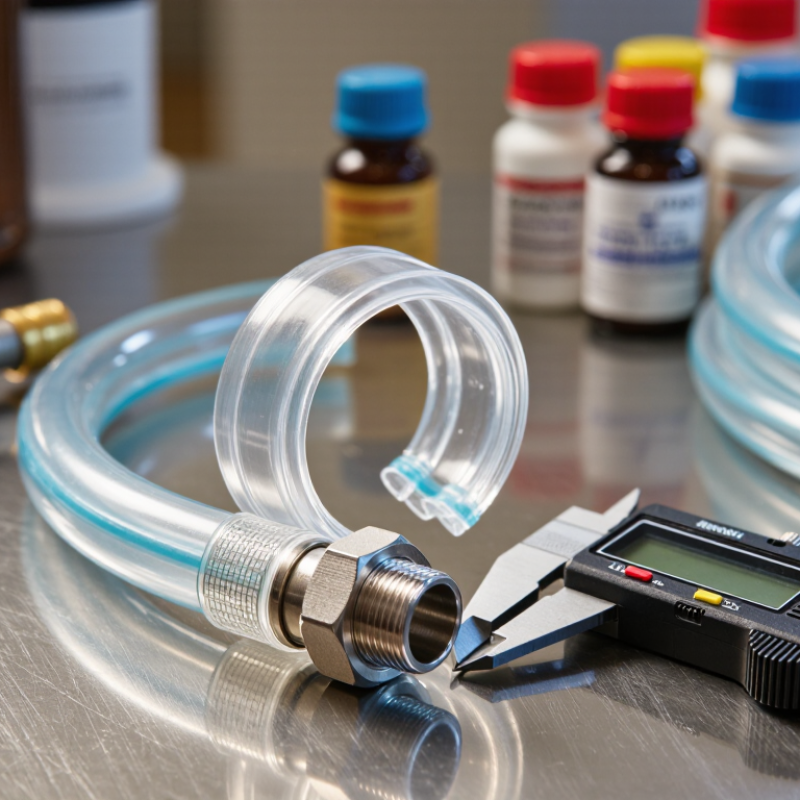
Before choosing flexible PVC tubing, define the application’s operating conditions in measurable terms. Identify the fluid, temperature range, pressure, and expected flow rate. Include temporary peaks, not only normal readings. A line carrying warm cleaning water may face sudden pressure changes during shutdown. Those changes can matter.
Check chemical compatibility with the actual fluid concentration and exposure time. Oils, solvents, and concentrated cleaners can affect PVC differently. Never rely on appearance alone. I have seen clear tubing remain visually intact while becoming stiff and brittle inside. That is an easy warning to miss.
Pressure ratings must match both working pressure and temperature. PVC tubing usually loses pressure capacity as temperature rises. Add suction conditions when pumps pull fluid through the line. A tube that works under pressure may collapse under vacuum. Measure the tightest bend radius, too. Sharp bends can restrict flow and create stress near fittings.
The environment also deserves careful inspection. Consider sunlight, ozone, abrasion, vibration, and contact with rough equipment. Outdoor tubing may need protection from ultraviolet exposure. In a moving assembly, repeated flexing can shorten service life. Keep records of operating hours and visible changes. This creates useful evidence for replacement decisions.
Cleaning methods require equal attention. Hot water, disinfectants, and repeated flushing can change tubing performance over time. Specify connection sizes and fitting materials before installation. Small mismatches often cause leaks. A practical selection should reflect real conditions, including mistakes, maintenance delays, and occasional overloads. That assumption may still need testing.
| Operating Condition | What to Define | Typical Reference Data | PVC Tubing Selection Considerations | Risk if Not Checked |
|---|---|---|---|---|
| Fluid or Gas | Identify the transported medium, concentration, purity, and whether it is liquid, gas, slurry, or particulate-laden. | Water, air, dilute aqueous solutions, mild chemicals, powders, and low-abrasion slurries may require different tubing constructions. | Confirm chemical compatibility with the exact PVC formulation, additives, temperature, concentration, and exposure time. Use a liner or different polymer when compatibility is uncertain. | Swelling, hardening, softening, cracking, permeation, contamination, or premature failure. |
| Temperature | Specify continuous temperature, short-term peaks, minimum temperature, and the duration of each exposure. | Many general-purpose flexible PVC tubes are used near ambient conditions; the allowable range depends on formulation and construction. A common planning range is approximately 0°C to 60°C, but the supplier’s rating must control. | Higher temperatures can reduce pressure capacity and increase permeation. Low temperatures can make PVC less flexible and more vulnerable to kinking or impact. | Loss of flexibility, deformation, embrittlement, leakage, or burst. |
| Working Pressure | Define normal operating pressure, maximum pressure, pressure fluctuations, and whether pressure is internal or external. | Pressure ratings vary substantially with inside diameter, wall thickness, temperature, reinforcement, and manufacturing design. | Select tubing with a published working-pressure rating above the maximum operating pressure at the actual operating temperature. Do not use burst pressure as the working limit. | Bulging, hose separation from fittings, leakage, or rupture. |
| Vacuum and External Pressure | Determine whether the line will operate under full or partial vacuum, suction, pump-down, or external compression. | Vacuum capability is not determined by positive-pressure rating. Small-bore tubing with a thicker wall generally resists collapse better than thin-wall tubing. | Choose tubing specifically rated for the required vacuum level. Consider spiral reinforcement or a rigid support when collapse resistance is critical. | Flattening, flow restriction, pump overload, or complete blockage. |
| Inside and Outside Diameter | Define required flow, fitting size, available space, wall thickness, and dimensional tolerances. | A larger inside diameter reduces flow resistance at the same flow rate. Wall thickness affects pressure, flexibility, and bend resistance. | Match the tubing dimensions to the fittings and calculate pressure drop for long runs, small diameters, or high-viscosity fluids. | Poor sealing, excessive pressure loss, flow reduction, or difficult installation. |
| Flow Rate and Velocity | State minimum, normal, and maximum flow rates, including pulsation and start-stop conditions. | Flow performance depends on inside diameter, length, fluid viscosity, temperature, fittings, and elevation changes. | Use the actual flow rate to estimate pressure drop. Avoid selecting a very small bore solely because the tubing is more flexible or less expensive. | Insufficient delivery, unstable dosing, noise, vibration, or excessive pump energy. |
| Bend Radius and Movement | Define the minimum static bend, repeated flexing, torsion, vibration, and movement frequency. | Minimum bend radius is product-specific and usually increases with outside diameter, wall thickness, reinforcement, and temperature. | Select a flexible grade for tight routing and a reinforced construction for repeated movement or higher pressure. Maintain the specified bend radius during installation. | Kinking, fatigue cracks, restricted flow, and fitting stress. |
| Abrasion and Particles | Identify particle size, solids concentration, velocity, repeated flexing, and contact with equipment or supports. | Clear, unfilled liquids generally create less wear than abrasive slurries, powders, or high-velocity solids. | Use a thicker wall or abrasion-resistant construction where needed. Consider a different material for highly abrasive service. | Wall thinning, pinholes, contamination, and unexpected leakage. |
| Outdoor and Environmental Exposure | Check sunlight, ultraviolet exposure, ozone, rain, humidity, dust, oils, and contact with nearby materials. | PVC performance can change with long-term UV exposure, weathering, oils, and temperature cycling. | For outdoor service, verify UV and weathering suitability or provide shielding. Avoid unverified exposure to petroleum-based fluids and aggressive solvents. | Discoloration, surface cracking, brittleness, and reduced service life. |
| Fittings and Connection Method | Define barb, compression, push-to-connect, clamp, or threaded connections and the required assembly method. | The fitting must match the tubing’s inside diameter, outside diameter, hardness, wall thickness, and pressure requirement. | Use compatible clamps or retainers where appropriate. Avoid excessive insertion force, sharp barbs, overtightening, and unsupported side loads. | Leaks, pull-off, tubing cuts, and damaged fittings. |
| Cleanliness and Regulatory Needs | Specify whether the application involves potable water, food contact, medical use, laboratory work, or general industrial service. | Compliance depends on the complete tubing formulation, production process, cleaning method, and intended use—not PVC material alone. | Request documentation for the applicable regional and industry requirements. Verify extractables, sterilization compatibility, and cleaning chemicals when relevant. | Non-compliance, contamination, rejected batches, or inability to validate the process. |
| Safety Factor and Service Life | Define required lifetime, duty cycle, maintenance interval, failure consequence, and installation conditions. | Pressure, temperature, chemical exposure, UV, flexing, and abrasion interact and can shorten service life. | Use published ratings at actual conditions, include an appropriate engineering margin, inspect regularly, and replace tubing showing cracks, swelling, discoloration, or permanent deformation. | Unplanned downtime, fluid release, equipment damage, or personnel safety hazards. |
Selection note: Final tubing suitability should be confirmed using the manufacturer’s technical data for the exact formulation, dimensions, temperature, pressure, fluid, and connection method.
Check the fluid, concentration, exposure time, temperature, and pressure first. Color and softness can mislead. Use a verified compatibility chart and safety data.
No. Clarity helps reveal bubbles, particles, and discoloration. A clear tube may become cloudy after repeated flushing, warning of possible material damage.
Heat can soften the tube and reduce pressure capacity. Cold conditions may make it stiff and easier to crack. Check continuous and intermittent temperature ratings.
No. Confirm the working pressure at the actual operating temperature. Also consider pulsation, vacuum, bending, and connection stress.
Measure the fitting outside diameter carefully. Use suitable clamps and avoid sharp bends. Inspect every joint under normal pressure before operation.
Leave enough length for movement and thermal expansion. Avoid loose loops near moving equipment. Tubing pulled too tightly may fail quietly.
Replace it when the surface becomes cloudy, hard, cracked, or permanently flattened. Review it after cleaning cycles, sunlight exposure, and repeated flexing.
Ask for current technical documents covering composition, pressure ratings, extractables, and applicable requirements. Confirm the documents match the exact grade and size. Batch traceability is useful.
Usually, yes. Real conditions can expose assumptions that specifications miss. Test temperature, pressure, bending, and chemical exposure when the application changes. I would not skip this.
Choosing the right Flexible Pvc Tubing begins with a clear understanding of the application’s operating conditions. Consider the type of fluid or gas being conveyed, expected temperature ranges, working pressure, exposure to sunlight or chemicals, movement, and the required service life. These factors help determine whether the tubing’s material properties, flexibility, transparency, and resistance characteristics are suitable for the intended use.
Next, select a tube size and wall thickness that provide adequate flow while supporting safe operation and easy installation. Review the tubing’s limits for chemical compatibility, temperature, pressure, bending, and repeated movement, rather than relying only on nominal dimensions. It is also important to confirm relevant compliance requirements, connection methods, routing conditions, and maintenance needs. Careful evaluation and proper installation can reduce kinking, leakage, premature wear, and replacement costs, helping ensure reliable long-term performance in the application.

 Orient Flex