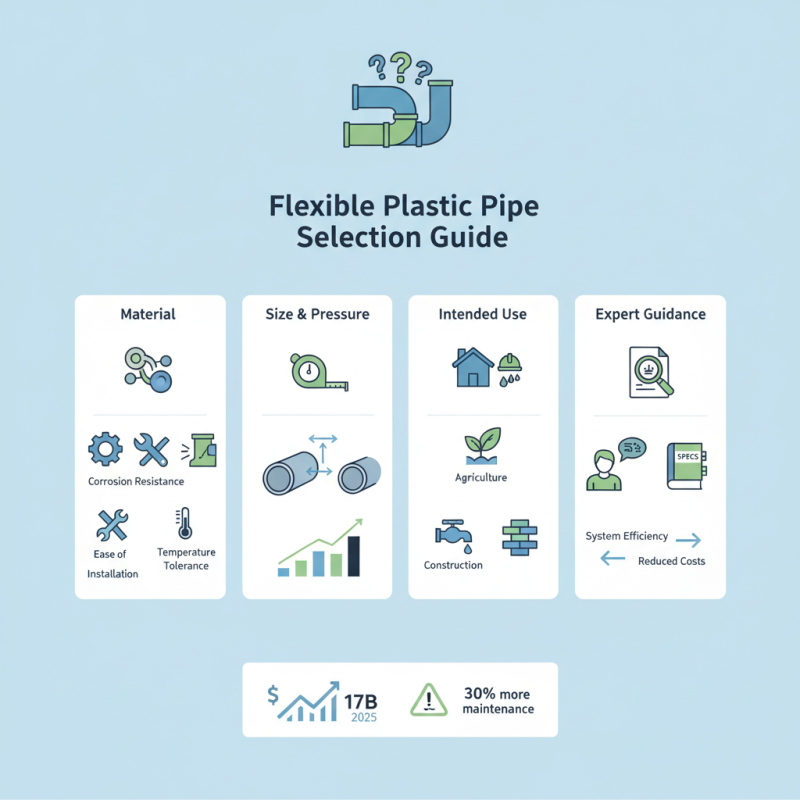
When it comes to selecting the right flexible plastic pipe, understanding the nuances is crucial. The global flexible plastic pipe market is projected to reach $17 billion by 2025, indicating a robust growth fueled by demand in agriculture, construction, and plumbing sectors. Choosing the appropriate pipe involves considering factors that influence performance and longevity.
Flexible plastic pipes have unique advantages. Their resistance to corrosion and ease of installation make them popular. However, not all pipes are created equally. For instance, installation errors can lead to leaks, while external factors like temperature can affect flexibility. Reports suggest that improper selection can lead to a 30% increase in maintenance costs over time.
A well-chosen flexible plastic pipe can significantly enhance system efficiency. Yet, many overlook the need for expert guidance. Evaluating materials, sizes, and intended use is essential. Industry experts recommend consulting product specifications to avoid costly mistakes. Making an informed decision can mitigate future risks and ensure the long-term success of your project.
When choosing flexible plastic pipes, understanding the different types available is crucial. Various options cater to specific needs. For instance, PVC pipes are lightweight and resistant to corrosion, making them ideal for drainage systems. However, they can be less durable in extreme temperatures.
Another option is polyethylene pipes. They are flexible and can handle pressure well, suitable for irrigation systems. Yet, they may not be ideal for high-temperature applications. Then there are cross-linked polyethylene (PEX) pipes. They excel in both flexibility and durability. However, they can be more expensive and might require professional installation.
Considering your project’s requirements is essential. Assess factors such as temperature tolerance, pressure ratings, and installation complexity. Skimping on quality can lead to future issues, causing delays and increased costs. Carefully weigh each option's pros and cons, as making the right choice can significantly impact your project’s success.
When selecting a flexible plastic pipe, evaluating material properties is crucial. Various types of plastics offer different benefits. For example, some are more resistant to chemicals while others excel in temperature tolerance. Understanding these properties can greatly influence your project’s success.
Consider flexibility and tensile strength. Some pipes are designed to bend easily without breaking. This is essential for installations that require numerous turns. However, overly flexible pipes may not maintain shape under heavy loads. Strike a balance between flexibility and durability.
Next, check for UV resistance and longevity. Pipes exposed to sunlight can degrade over time. It’s vital to ensure that the material can withstand external conditions. Reflect on your specific environment. Will the pipes be buried, or exposed to harsh weather? Choosing the right material ensures long-term reliability. Each project has unique requirements; take time to assess them carefully.
When choosing flexible plastic pipes, identifying your specific application requirements is crucial. Different projects have unique needs. For example, pipes for irrigation systems require high durability. In contrast, plumbing may prioritize flexibility and ease of installation. Understanding your environment, such as temperature fluctuations and exposure to chemicals, also impacts your choice.
Consider the diameter and length required for your application. Matching the pipe size to your project specifications ensures optimal performance. You may need a larger diameter for high-flow applications. Another aspect to reflect on is the expected pressure ratings. Using pipes that can’t handle the pressure might lead to leaks.
Testing various pipes in real-world scenarios can help you fine-tune your selection. Observe how they perform under stress. This hands-on approach may reveal unexpected weaknesses. It’s also wise to talk to experts who understand the nuances of different materials. They can provide insights that might not be apparent from product specifications alone. Engaging with professionals offers access to their experience and knowledge on the best options for your needs.
When selecting flexible plastic pipes, cost and durability are critical factors. According to a report by the Plastics Pipe Institute, the average lifespan of polyethylene pipes can exceed 50 years. This long duration often offsets higher upfront costs. Flexible plastic pipes are typically easier to install, which also reduces labor costs. In many cases, installation can lead to overall savings.
Durability in flexible plastic pipes can vary significantly based on material. For example, PVC pipes offer good resistance to corrosion but may not perform as well under extreme temperatures. In contrast, cross-linked polyethylene (PEX) pipes show excellent flexibility and can handle higher temperatures. Choosing the right material based on the environment and application is vital. Industry data suggest that using PEX can result in a 20% lower failure rate than PVC in cold-weather applications.
Acknowledging the trade-offs is essential. While flexible plastic pipes like PEX may come with a higher initial cost, they could yield lower maintenance expenses over their lifespan. Moreover, geographic factors play a role in determining which pipe material is best suited for your needs. Understanding these variables helps in making informed decisions for your specific applications.
Flexible plastic pipes are becoming increasingly popular in various applications. When installing these pipes, it’s crucial to consider factors such as proper technique and environmental conditions. For instance, the installation process should accommodate temperature fluctuations. Research shows that improper installation can reduce pipe lifespan by up to 30%.
Maintenance is key to ensuring the longevity of flexible plastic pipes. Regular inspections every six months can help identify leaks or cracks before they become serious. A study by the American Society of Civil Engineers indicates that leaks from poorly maintained pipes can lead to 8% of a facility's total water loss. Always check for signs of wear and create a maintenance schedule. This proactive approach can save both time and money in the long run.
While flexible plastic pipes are durable, they are not invincible. UV exposure can degrade the material over time. Applying protective coatings can mitigate this risk. It’s important to be aware of local regulations regarding pipe installation and maintenance to avoid safety hazards. Regular training for employees on proper handling and care of these pipes can enhance overall system reliability.
: Evaluate material properties like chemical resistance and temperature tolerance. These can impact your project’s outcome.
Flexibility allows pipes to bend without breaking. However, too much flexibility might lead to shape loss under heavy loads.
UV resistance helps pipes withstand sunlight exposure. Without it, pipes can degrade, affecting their longevity.
Conduct inspections every six months. This helps catch leaks or cracks before they escalate into bigger issues.
Incorrect installation may reduce a pipe's lifespan by up to 30%. Use proper techniques to avoid future problems.
Regular maintenance ensures longevity. Without it, issues like leaks can lead to significant water loss and extra costs.
No, they can degrade with UV exposure over time. Applying protective coatings can help reduce this risk.
Temperature fluctuations and weather conditions can affect installation success. Always adapt your approach to these variables.
Regular training improves handling and care. This enhances overall system reliability and helps prevent safety hazards.
When selecting the best flexible plastic pipe for your needs, it is essential to understand the various types available on the market. Different materials offer unique properties, influencing factors such as durability, flexibility, and resistance to environmental conditions. Evaluating your specific application requirements, including applicable pressures and temperatures, will help streamline your decision-making process.
Additionally, comparing costs and durability among different flexible plastic pipes will provide insight into the long-term investment each option represents. Proper installation and regular maintenance are also crucial to ensure the performance and longevity of your chosen pipe. By considering these key aspects, you can make an informed choice that meets your specific plumbing, irrigation, or construction needs.

Orient Flex