Choosing a dependable Silicone Hose manufacturer requires more than comparing prices or browsing polished catalogs. Material quality, reinforcement design, curing consistency, and technical support can determine whether a hose survives real service.
Silicone Hose engineer Michael R. Lawson says, “A hose is only as reliable as its weakest connection.” That practical warning guides this 2026 review. We examine manufacturers and suppliers through measurable details, including operating temperature, pressure resistance, vacuum performance, wall thickness, and bend radius. We also consider production capacity, customization, batch traceability, and response speed. A supplier may offer beautiful samples, yet inconsistent inner surfaces can create problems during installation.
The guide focuses on suppliers serving automotive, food processing, pharmaceutical, medical, and industrial applications. Each category demands different evidence. Food-contact products need suitable documentation. Automotive hoses require stable performance near heat, vibration, and coolant. Industrial buyers may prioritize reinforcement and long-term flexibility.
No ranking can remain perfect forever. Prices change. Factories expand. Certifications expire or cover only specific products. Some supplier information also remains difficult to verify publicly. That limitation deserves attention, not concealment. Buyers should request current test reports, production samples, compliance documents, and clear warranty terms before placing large orders.
This overview is designed for engineers, distributors, procurement teams, and project owners. It combines technical judgment with practical purchasing experience. The goal is not to name one universal winner. It is to identify the Silicone Hose partners most likely to match a project’s actual conditions.
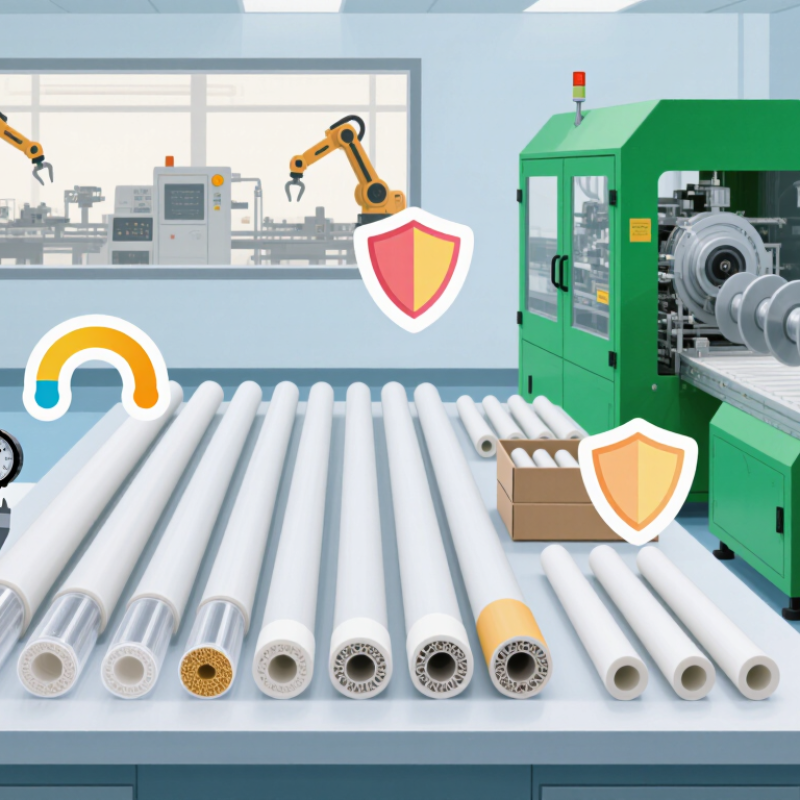
Silicone hoses are flexible tubes made from silicone rubber, often reinforced with fabric or wire. They move air, coolant, water, or process fluids through demanding systems. Unlike ordinary rubber, silicone stays flexible across a wide temperature range. That matters in 2026, as compact engines, battery systems, medical equipment, and automated machinery generate more heat. A hose may sit beside a hot manifold or tight electrical housing. It must not crack, soften, or release unwanted particles.
From practical installation work, I have seen a hose fail because its bend radius was ignored. It looked perfect. Engineers therefore check inner diameter, wall thickness, pressure rating, and temperature limits. For demanding systems, layered reinforcement improves burst resistance. Smooth inner walls can support cleaner flow. Small details matter. Clamps, bends, vibration, and mounting space can change service life. Silicone is not ideal for every fluid. Some fuels, oils, and abrasive chemicals can shorten its useful life. That limitation is easy to overlook.
Reliable manufacturers and suppliers should provide traceable material data and consistent dimensional records. They should explain curing methods, tolerances, temperature limits, and test results. Independent inspection adds confidence, especially when hoses protect people or expensive equipment. Still, paperwork is not enough. A sample should be measured, flexed, and exposed to realistic heat before large-scale purchasing. I would also ask how rejected batches are controlled. Supplier claims can sound precise, yet field conditions remain messy. A hose selected only by price may create leaks, downtime, or replacement waste.
Silicone hoses are flexible, heat-resistant tubes used for coolant, charge-air, food, pharmaceutical, laboratory, and process-fluid transfer. Their resistance to ozone, ultraviolet exposure, weathering, and temperature makes them important for durable equipment design in 2026. The chart shows representative continuous service-temperature ranges; actual limits depend on hose construction, pressure, fluid compatibility, reinforcement, and supplier specifications.
Indicative industry ranges based on commonly published silicone elastomer performance data. Always verify the technical datasheet before selection.
Choosing a silicone hose supplier requires more than comparing prices. Begin with the hose’s actual service conditions, including temperature, pressure, fluid type, vibration, and installation space. A reliable manufacturer should explain how its silicone compound matches these demands. Ask for material data, dimensional tolerances, working pressure, and recommended bend radius. Vague answers are warning signs.
Inspect the supplier’s production controls. Look for batch traceability, curing records, visual inspection, and pressure testing procedures. Request samples from normal production, not specially prepared pieces. Check the surface for bubbles, cracks, uneven thickness, or weak reinforcement. Small defects can become leaks after repeated heat cycles. Certifications may support credibility, but they should match the product and market requirements.
Technical support also matters. A capable supplier can review drawings, suggest reinforcement layers, and identify risky connection points. Confirm mold costs, minimum order quantities, lead times, packaging, and replacement policies in writing. Ask how complaints are investigated and how corrective actions are documented. This part is often overlooked.
Do not trust polished brochures alone. A supplier may provide excellent samples but inconsistent mass production. That possibility deserves attention. Compare at least two production batches when the application is critical. Review communication speed, document accuracy, and willingness to admit limitations. The best choice is not always the cheapest or largest supplier. It is the one that produces consistent hoses and answers difficult questions clearly.
2026 Best Silicone Hose Manufacturers and Suppliers
Key Manufacturing Methods, Materials, and Quality Standards
Reliable silicone hose production begins with controlled material selection. Manufacturers commonly use high-consistency silicone rubber for demanding industrial applications. Liquid silicone rubber suits complex shapes and clean, automated molding. The compound may include peroxide or platinum curing systems. Each choice changes flexibility, surface finish, and temperature performance. A hose should not feel excessively soft or chalky. Small defects often signal poor mixing or curing control.
Extrusion creates continuous hose lengths with consistent inner diameters. Mandrel molding supports reinforced bends and customized shapes. Braided, knitted, or spiral fabrics can improve pressure resistance. The reinforcement must remain centered during curing. Otherwise, the hose may twist under load. Cutting, trimming, and post-curing require equal attention. I have seen attractive samples fail because their cut ends exposed fabric layers.
Quality checks should follow documented procedures, not visual judgment alone. Inspectors typically measure dimensions, hardness, tensile strength, elongation, and burst pressure. Heat-aging tests reveal whether the material becomes brittle or sticky. Air-leak testing can expose microscopic pinholes. Relevant standards may include ISO 9001 quality systems and application-specific requirements, such as FDA or automotive specifications. However, certification alone proves little without traceable batch records, calibrated instruments, and retained samples. Supplier evaluations should also review change-control practices. Material substitutions deserve written approval. Even experienced teams can overlook them.
Silicone hose suppliers in 2026 are increasingly divided by application, material grade, and manufacturing capability. Automotive suppliers typically produce reinforced coolant, turbocharger, and air-intake hoses. Their products must resist heat, pressure, vibration, and repeated flexing. SAE J20 remains a useful reference for coolant hose performance, although it does not replace application testing.
Medical and food-processing suppliers require cleaner production controls. Medical tubing may need biocompatibility evidence under ISO 10993, while food-contact products often require compliance with applicable FDA requirements. Surface smoothness matters here. A rough inner wall can trap residue and complicate sanitation. That detail is easy to overlook. Industrial suppliers serve pumps, compressors, laboratories, and chemical-transfer systems. They often offer platinum-cured silicone, braided reinforcement, custom bends, and tighter dimensional tolerances.
Market data supports this broad demand. Grand View Research estimated the global silicone market at about USD 18.7 billion in 2023, with growth projected through 2030 at roughly 6.7% annually. This figure covers more than hoses, so it should not be treated as a direct hose-market value. MarketsandMarkets also identifies healthcare, automotive, and industrial processing as important silicone demand sectors. Buyers should compare temperature ratings, burst pressure, permeability, aging resistance, traceability, and batch testing. Price alone is a weak filter. I would also question supplier claims that lack test conditions, because “high temperature” means little without time, pressure, and fluid data.
2026 Best Silicone Hose Manufacturers and Suppliers
Choosing the right silicone hose partner in 2026 requires more than comparing prices. Start with your operating conditions. Record the working temperature, pressure, fluid type, bend radius, and installation space. A hose used near an engine needs different reinforcement from one used in food processing. Request material details, hardness data, dimensional tolerances, and production drawings. Reliable suppliers should explain their testing methods clearly. They should also provide batch traceability and consistent documentation.
Ask whether the manufacturer can produce prototypes before large orders. A practical sample test may reveal stiffness, odor, fitting issues, or unexpected expansion. Check the hose after repeated heat cycles, not only after installation. This step is often overlooked. A polished website is not proof of technical capability. Review factory capacity, quality controls, response time, and experience with similar applications. Certifications can support trust, but they should match your actual market and use case. Even experienced buyers sometimes focus too heavily on certification and miss delivery risks.
Tips: Share accurate drawings and operating data. Confirm minimum order quantities, lead times, packaging, and replacement policies in writing. Inspect samples under real conditions when possible. Ask how defects are recorded and corrected. If communication feels vague, pause before committing. A lower price may hide thinner walls, unstable tolerances, or limited technical support. Allow room for testing, because real installations rarely behave exactly like early calculations.
| Partner Type | Typical Strength | Best-Fit Applications | Technical Capabilities to Confirm | Required Documentation | Main Buying Risk | Recommended Evaluation Method |
|---|---|---|---|---|---|---|
| Specialized Silicone Hose Manufacturer | Direct control over silicone compound selection, extrusion, curing, dimensional control, and quality inspection. | Standard industrial hose, high-temperature air or coolant lines, engine and machinery systems. | Working temperature Burst pressure Wall tolerance Reinforcement options | Technical datasheet, dimensional drawings, batch traceability, test reports, and quality-management certification where applicable. | Catalog specifications may not represent the exact compound or construction supplied for a custom order. | Request production samples and compare test results with the actual operating temperature, pressure, fluid, and bend radius. |
| Industrial Hose Supplier | Broad product availability and experience serving maintenance, repair, and industrial distribution channels. | General factory maintenance, compressed air, water, light chemical service, and replacement programs. | Stock availability Size range Cut-length service Delivery capability | Product catalog, certificates of conformity, material information, inspection records, and warranty terms. | Product may be suitable for general service but unsuitable for high vacuum, aggressive chemicals, or specialized regulatory use. | Match the product code to a written service specification rather than selecting only by internal diameter. |
| Custom Hose Fabricator | Ability to produce formed assemblies, elbows, reducers, wrapped sections, and application-specific hose kits. | Engine compartments, compact equipment layouts, difficult routing, and low-to-medium volume custom projects. | Custom geometry Mandrel forming End finishing Assembly integration | Approved drawings, first-article inspection report, fit-check records, material declaration, and revision control. | Tooling charges, minimum order quantities, or dimensional variation may increase total project cost. | Provide a 2D drawing, 3D model, samples, or routing envelope and approve a first article before full production. |
| High-Temperature Silicone Hose Specialist | Focused knowledge of heat-resistant silicone formulations and reinforced constructions. | Hot-air ducting, turbocharger-related systems, engine cooling, industrial ovens, and thermal equipment. | Temperature rating Heat aging Pressure retention Thermal cycling | Temperature-rating basis, heat-aging data, pressure test method, reinforcement specification, and installation instructions. | Maximum temperature ratings vary with pressure, duration, compound, reinforcement, and the surrounding environment. | Evaluate performance under combined heat, pressure, vibration, and thermal-cycling conditions instead of temperature alone. |
| Food, Beverage, or Pharmaceutical Hose Supplier | Focus on hygienic design, cleanability, traceability, and controlled-contact materials. | Food transfer, beverage processing, sanitary water, laboratory systems, and selected pharmaceutical processes. | Smooth bore Cleanability Sterilization compatibility Low-extractable options | Food-contact declaration where applicable, extractables or migration information, lot traceability, cleaning guidance, and regulatory test reports. | Compliance depends on the exact formulation, construction, fittings, and intended contact conditions; a general “food grade” statement is insufficient. | Define the media, concentration, temperature, cleaning chemicals, sterilization method, and contact time in writing. |
| Medical or Laboratory Tubing Supplier | Experience with controlled materials, biocompatibility evaluation, and consistent small-diameter tubing. | Fluid handling, laboratory instruments, peristaltic applications, and non-implantable medical equipment. | Biocompatibility Particle control Permeability Sterilization | Applicable biocompatibility reports, sterilization validation information, material statement, lot records, and change-control policy. | Medical suitability is application-specific and cannot be established solely by calling a tube “medical grade.” | Identify the intended body or fluid contact, sterilization method, shelf life, and applicable regulatory pathway before qualification. |
| OEM and Private-Label Supplier | Can support dedicated specifications, packaging, labeling, forecasts, and repeat production programs. | Equipment manufacturers, service kits, branded replacement programs, and long-term supply contracts. | Forecast planning Change notification Packaging control Supply continuity | Quality agreement, approved specification, inspection plan, change-control procedure, packaging standard, and continuity plan. | Material or process changes can affect fit and performance if notification and approval procedures are not contractually defined. | Audit the supplier’s change-control, traceability, capacity planning, and nonconformance processes before approval. |
| Regional Distributor or Stocking Partner | Fast local delivery, simplified purchasing, technical support, and access to multiple hose constructions. | Urgent maintenance, replacement parts, small quantities, and projects requiring local inventory. | Inventory accuracy Lead time Cutting service Technical support | Manufacturer datasheet, certificate of conformity, batch or lot information, and documented product origin. | Traceability may be weaker when products are resold through several supply-chain levels. | Confirm the original manufacturer, exact part number, storage conditions, shelf life, and certificate availability. |
| Low-Cost General-Purpose Supplier | Competitive pricing and simple availability for non-critical, low-severity service conditions. | Low-pressure air, water, dust protection, temporary routing, and general-purpose applications within verified limits. | Basic dimensions Temperature range Pressure rating Visual quality | Clear datasheet, material description, pressure test information, and basic conformity documentation. | Lower price can reflect limited testing, inconsistent dimensions, shorter service life, or insufficient traceability. | Use only after confirming the application is non-critical and conducting dimensional, pressure, and leakage checks. |
It transports air, coolant, water, or process fluids. Flexible tubing.
Compact engines, battery systems, and automated equipment create more heat. Silicone stays flexible across broad temperature ranges.
Check inner diameter, wall thickness, pressure rating, temperature limits, and bend radius. Space matters too.
A tight bend can stress the wall and restrict flow. The hose may look fine initially, but fatigue can develop later.
No. Some fuels, oils, and abrasive chemicals can shorten service life. Always confirm chemical compatibility.
Request material data, hardness, tolerances, drawings, test results, and batch traceability. Clear records matter.
Yes. Measure, flex, and heat the sample under realistic conditions. Check stiffness, odor, expansion, and fitting problems.
Confirm minimum order quantities, lead times, packaging, replacement policies, and defect handling. Delivery problems can be expensive.
Not always. Certifications support confidence, but practical testing and dimensional inspection remain necessary.
Sometimes, but price alone is weak evidence. Thin walls, unstable tolerances, or limited support may create leaks and waste.
In 2026, Silicone Hose remains an essential solution for managing the transfer of air, fluids, chemicals, and gases across automotive, industrial, medical, food-processing, and energy applications. Its flexibility, temperature resistance, durability, and clean performance make it valuable in demanding operating environments. This guide explains what silicone hoses are, why they matter, and how manufacturers and suppliers support evolving industry requirements through advanced materials, reinforced structures, and reliable production methods.
It also outlines how to evaluate a Silicone Hose partner by reviewing manufacturing capabilities, material consistency, product customization, testing procedures, certifications, quality management, and supply reliability. From molded and extruded hoses to reinforced and specialized designs, different supplier categories serve different performance needs. By comparing application compatibility, pressure and temperature ratings, dimensional accuracy, compliance, technical support, and total cost, buyers can select a dependable partner that delivers safe, durable, and efficient hose solutions.

Orient Flex