The 2026 hydraulic equipment market will reward manufacturers that combine proven performance with transparent sourcing. Hydraulic Hose remains essential in excavators, agricultural machinery, mining systems, forklifts, and industrial production lines. MarketsandMarkets identifies construction, agriculture, and material handling as major demand sectors for hydraulic components. Its industry analysis also highlights the growing importance of high-pressure and durable hose assemblies.
The details matter. A reliable manufacturer should demonstrate compliance with SAE J517 and ISO 18752 requirements. It should also provide pressure ratings, temperature limits, impulse-test results, and traceable batch records. Grand View Research reports continued growth in the global hydraulic hose market, supported by machinery investment and replacement demand. However, market growth alone does not prove product quality. A polished website cannot replace documented testing, stable delivery, and responsive technical support.
This guide evaluates the best hydraulic hose manufacturers for global buyers in 2026. The comparison considers product range, reinforcement design, fitting compatibility, customization, certifications, production capacity, and after-sales service. Field experience suggests that small details often decide performance. A hose may look robust, yet fail early because of incorrect bend radius or unsuitable fluid compatibility. Buyers should question vague claims. They should inspect evidence. No supplier is perfect, and even established manufacturers may struggle with lead times or regional support. Careful verification remains essential.
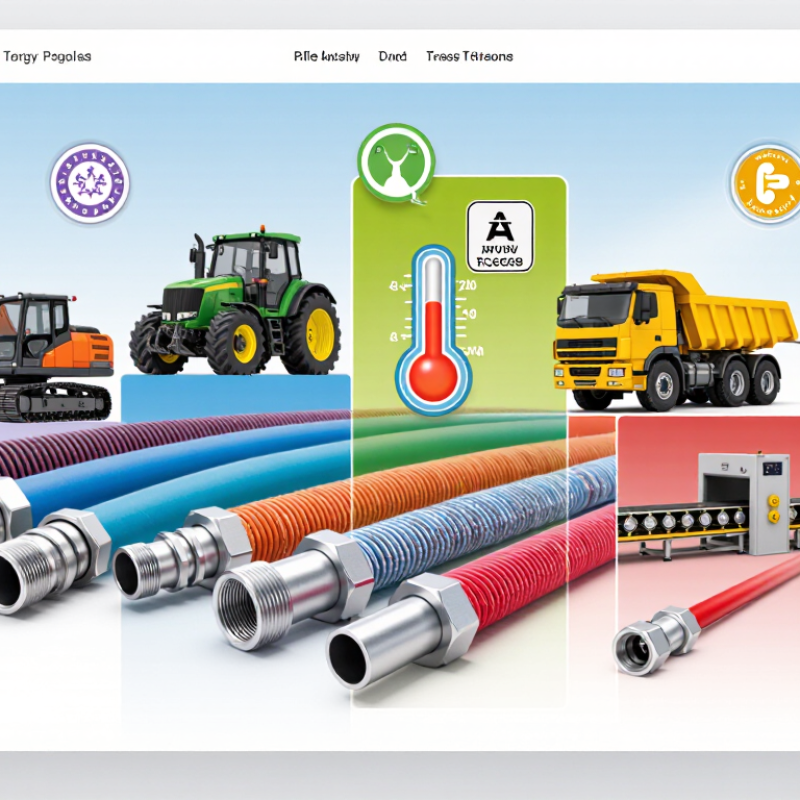
How to Evaluate Hydraulic Hose Manufacturers in 2026
Choosing a hydraulic hose manufacturer requires more than comparing prices. Grand View Research estimates the global hydraulic hose market will grow steadily through 2030, driven by construction, mining, agriculture, and industrial machinery. However, market growth does not guarantee consistent quality. Buyers should verify working pressure, burst pressure, impulse-cycle performance, temperature range, and fluid compatibility for every hose series.
Request current test reports, not promotional claims. Check whether production follows recognized requirements, such as SAE and ISO specifications. Factory audits should review rubber compounding, wire reinforcement, crimping control, cleanliness, and batch traceability. A reliable manufacturer can identify the material lot behind a hose shipped months earlier. I would also inspect sample cut sections. Uneven wire spacing can reveal problems quickly. A low quote can still be expensive.
Tips: Compare at least three suppliers using the same technical specification. Ask for production samples and independent test evidence. Review delivery records, complaint handling, and replacement procedures. MarketsandMarkets reports continued demand from mobile equipment and industrial applications, where downtime carries high costs. Therefore, evaluate lifecycle value, not unit price alone. Do not accept vague claims about “premium quality.” They are not measurable. One weakness remains: audit documents may reflect a single production period, so repeat inspections are worthwhile.
| Evaluation Area | What Global Buyers Should Verify | Relevant Technical Reference | Recommended Buyer Benchmark | Suggested Weight |
|---|---|---|---|---|
| Product Standard Compliance | Confirm that the hose construction, dimensions, pressure rating, impulse performance, and marking match the requested specification. | SAE J517; ISO 1436; EN 853, EN 856, or EN 857, where applicable. | Require a current technical datasheet, conformity declaration, and sample markings that correspond to the quoted hose type. | 15% |
| Pressure Performance | Check working pressure, minimum burst pressure, pressure ratio, and suitability for pressure spikes in the intended hydraulic circuit. | Applicable SAE, ISO, or EN hose specification; system design requirements. | Working pressure must meet or exceed the system requirement at the actual operating temperature and hose size. | 15% |
| Temperature Resistance | Review the hose temperature range for continuous operation, peak exposure, fluid type, and environmental conditions. | Manufacturer technical documentation and the applicable product standard. | Use a documented temperature range that covers the hydraulic fluid, ambient conditions, and expected pressure duty. | 10% |
| Fluid Compatibility | Verify compatibility of the tube, reinforcement, cover, and fittings with the specified hydraulic fluid and additives. | Fluid compatibility tables; SAE J517 or the relevant hose specification. | Obtain written confirmation for mineral-oil, water-based, biodegradable, or other special fluids before approval. | 10% |
| Impulse and Fatigue Testing | Evaluate resistance to repeated pressure cycles, vibration, flexing, and dynamic operating conditions. | ISO 6803 and applicable SAE, ISO, or EN performance requirements. | Request test reports identifying the hose construction, test pressure, temperature, cycle count, and failure criteria. | 12% |
| Dimensional and Assembly Accuracy | Check inner diameter, outer diameter, wall thickness, bend radius, cut length, fitting dimensions, and crimp geometry. | SAE J517; ISO 18752; fitting and assembly specifications. | Approve first articles or samples using calibrated measurement tools and a documented crimping procedure. | 10% |
| Quality Management System | Assess process control, incoming-material inspection, traceability, nonconformance handling, and corrective-action procedures. | ISO 9001 certification and internal quality-control records. | Verify certificate validity, certification scope, production-site address, and batch-level traceability. | 10% |
| Material and Regulatory Documentation | Review material declarations, restricted-substance information, safety data, and market-specific compliance documents. | REACH and RoHS requirements where applicable; destination-country regulations. | Require signed declarations and supporting laboratory or supplier evidence for regulated markets. | 6% |
| Production and Inspection Capability | Review reinforcement production, rubber mixing, extrusion, vulcanization, assembly, pressure testing, and final inspection capacity. | Auditable production records and inspection plans. | Complete a remote or on-site audit and confirm capacity against forecast volume and required lead time. | 5% |
| Delivery and Supply Continuity | Evaluate standard lead time, minimum order quantity, packaging, export experience, safety stock, and contingency planning. | Purchase agreement, quality agreement, and logistics documentation. | Use documented lead-time performance and require a recovery plan for material shortages or production interruptions. | 4% |
| Warranty and Technical Support | Review warranty duration, claim procedure, root-cause analysis, replacement policy, and application engineering support. | Written warranty terms and after-sales procedure. | Prefer suppliers that provide installation guidance, failure analysis, and a defined response time for quality claims. | 3% |
Compare working pressure, burst pressure, temperature range, bend radius, and fluid compatibility. Price comes later. A cheap hose may create expensive downtime.
Request current test reports, batch records, and certificates linked to actual production lots. Avoid vague claims like “premium quality.” They are not measurable.
Review rubber compounding, wire reinforcement, crimping control, cleanliness, and traceability. Inspect a cut sample. Uneven wire spacing can reveal weakness.
Wire-braid hoses fit medium-pressure equipment. Spiral-wire hoses suit severe impulse service. Thermoplastic hoses reduce weight and resist external abrasion.
Standards make supplier comparisons more consistent. Common references include SAE, EN, and ISO requirements. Still, certificates cannot represent every worksite.
Check fitting cleanliness, cover adhesion, crimp dimensions, storage conditions, and pressure testing. Ask how older batches can be traced. One audit may not be enough.
Bend samples near the stated minimum radius. Expose them to oil and temperature changes. A polished sample proves little.
Compare delivery records, complaint handling, replacement support, minimum orders, and custom-length capability. Use the same specification for at least three suppliers. I might still overvalue fast communication. Testing matters more.
Choosing the right Hydraulic Hose manufacturer in 2026 requires more than comparing prices. Global buyers should evaluate production capacity, technical expertise, material selection, testing procedures, and experience with international orders. Key product considerations include pressure ratings, temperature resistance, flexibility, abrasion protection, connection types, and compatibility with different hydraulic systems. Manufacturers should also demonstrate compliance with recognized industry standards and provide clear technical documentation for each product.
Quality control, certifications, traceability, and supply chain reliability are equally important. Buyers should review inspection processes, batch testing, delivery performance, packaging, and after-sales support before making a decision. Pricing should be assessed alongside customization capabilities, minimum order quantities, lead times, and long-term operating value. By comparing manufacturers according to market coverage, product capability, quality assurance, customization options, and communication efficiency, international purchasers can select a dependable partner that meets both technical requirements and commercial expectations.

 Orient Flex